Pet Ashes Tattoo: Is It Safe to Put Ashes in Tattoo Ink?
A memorial tattoo with a little of your pet's ashes in the ink is a way to keep them with you for good, and more artists offer it than many people realize. This guide explains how it works, what the real safety questions are, how to choose an artist and what to ask, and the alternatives that need no ashes at all.
Yes, you can put your pet's ashes in a tattoo: an artist mixes a small pinch of finely ground ash into fresh ink. No study has tested its safety, and the main risk is contamination during handling, not the ashes themselves. Choose an artist who sterilizes the ash and uses a new, sealed bottle of ink only for you.
Some people want their pet with them in the most literal way: a memorial tattoo with a little of the ashes mixed into the ink. It is possible, and a number of tattoo artists offer it. It is also a practice with no safety studies behind it and no agreed standard for how it should be done. This guide explains what actually happens, where the real risks are, how to find an artist who does it carefully, and the memorial tattoos and keepsakes that give you the same closeness without adding anything to the ink.
Can you put your pet's ashes in a tattoo?
Yes. A small amount of ashes, ground very fine, is mixed into tattoo ink, and the tattoo is then done the same way as any other. The ashes do not change the color in any visible way. The tattoo looks like an ordinary tattoo, and its meaning is known only to you and the people you tell.
Not every artist will do it. Tattooing is overseen by state and local health authorities, not by one national rule, and many artists decline ash work because it means adding something to the ink that the manufacturer did not make or test. Expect to make a few calls before you find a studio that offers it.
Only a tiny amount is used. Too much ash thickens the ink and makes it harder to work with, so a tattoo takes a small pinch, a very small fraction of what your pet's ashes fill. If you plan to use the rest for an urn, jewelry or scattering, set aside a small portion first.
Is a tattoo with pet ashes safe?
No study has tested it, so no one can honestly say it is proven safe or proven harmful. What we do know comes from two directions.
The ashes themselves. Flame cremation runs at roughly 1,400 to 1,800°F, which leaves only bone minerals, mostly calcium phosphate, and burns off organic material. Right out of the cremation chamber, the ashes are essentially free of living organisms. The problem is everything after that: the processor, the bag, the urn, the spoon and the room. By the time the ashes reach a tattoo studio, they are no longer sterile.
What goes into the ink. Infections from tattoos usually come from contaminated ink or unsanitary practice. The FDA's tattoo safety guidance says infections can come from ink contaminated with bacteria or mold, that diluting pigments with non-sterile water is a common culprit, and that even sealed, unopened inks can carry microorganisms. In a 2024 study, FDA scientists found bacteria in about a third of 75 sealed tattoo and permanent makeup inks they tested. Adding ashes means opening the ink and introducing a new material, which is exactly the kind of step that can bring in contamination if it is done carelessly.
So the honest answer is that the risk depends on handling. Ashes that are sterilized and mixed into fresh sterile ink with clean technique carry a different risk from ashes stirred into a pot of ink from an open bag.
How is ash prepared for tattoo ink?
Careful artists follow a few steps, and asking about them tells you a lot:
- Sieving and grinding. Cremated remains are gritty, with some larger fragments. The ash is sifted and ground to a fine powder so it mixes evenly and passes through the needle.
- Sterilizing the ash. Many artists heat-sterilize the powder, often in an autoclave, the same machine used to sterilize tattoo equipment, before it touches the ink.
- Mixing into new ink. A small amount is mixed into a fresh, sealed bottle of ink, usually black, for your tattoo only. It should never go into a shared ink supply.
- Single use. The prepared ink is used for your session and the rest discarded or given back, not saved for others.
Some families send a small amount of ashes to a specialist that prepares ash-infused ink in a lab and ships it to their artist. If you go that way, ask the artist first whether they will work with ink they did not buy themselves, since many will not.
How do you find an artist who will do it?
Start with studios that do memorial work. Look at portfolios for paw prints, pet portraits and memorial pieces, and ask directly whether they tattoo with ashes. A good artist will answer your questions about sterilization without hesitation, and will tell you plainly if they do not offer it.
A few signs of a careful studio:
- A current state or county license displayed or available on request.
- An autoclave and single-use needles opened in front of you.
- A clear process for the ashes that they can describe step by step.
- No pressure. An artist who is comfortable with you taking a week to decide is a better sign than one eager to start today.
What should you ask before booking?
Bring these questions to the consultation:
- Have you tattooed with ashes before, and can I see healed examples?
- How do you sterilize the ashes, and how much will you use?
- Will you mix the ashes into a new bottle of ink used only for my tattoo?
- Which ink brand do you use, and is it sold as sterile?
- What happens to any leftover ink and ashes?
- Is there an extra charge for preparing the ashes?
- What aftercare do you recommend, and when should I call you or a doctor?
Talk to your doctor before any tattoo if you have a weakened immune system, diabetes, a bleeding disorder or a history of skin reactions, or if you are pregnant. If a healing tattoo becomes increasingly red, hot, swollen or painful, or you develop a fever, the FDA advises contacting both the tattooist and a health care professional.
Are there memorial tattoos without ashes?
Yes, and many people find them just as meaningful. The meaning of a memorial tattoo comes from what it shows, not only from what is in it:
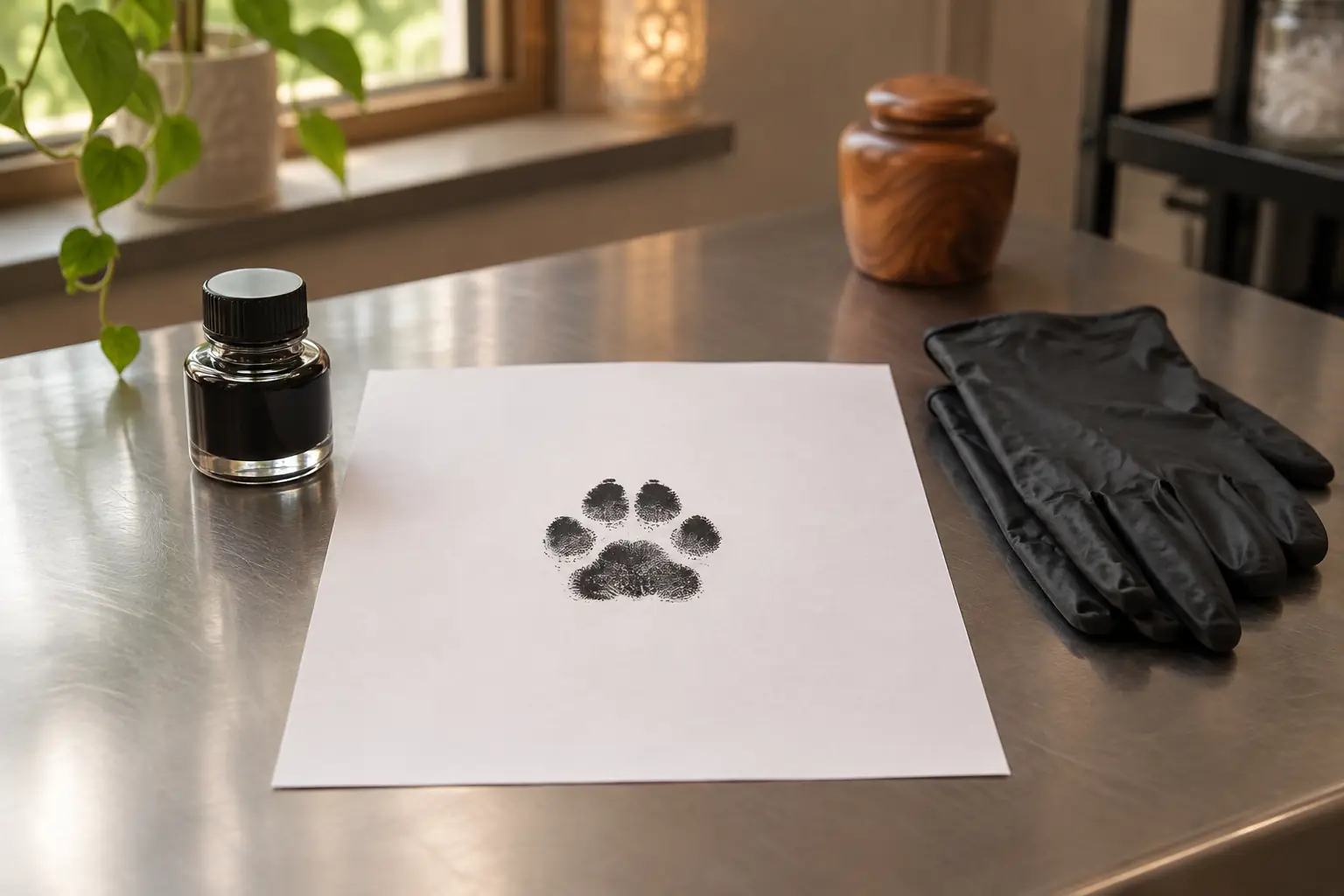
- Your pet's actual paw print. An ink paw print on paper is what tattoo artists work from, and it reproduces the real shape of your pet's paw, toe pads and all. If you have time before cremation, our guide to paw prints, nose prints and fur keepsakes explains how to ask for one.
- A nose print. The ridges of a dog's or cat's nose make a small, distinctive tattoo, and the print is taken the same way as a paw print.
- A portrait. A good photo is enough for a skilled artist. Some people bring a commissioned pet portrait as the reference. Our pet portraits guide covers printed and hand-painted options.
- A name, date or line in your own handwriting, or the outline of your pet's ear, tail or silhouette.
These carry none of the extra handling questions that ashes do, and they can be done by any good artist.
What are other ways to keep your pet's ashes close?
If what you want is to carry part of your pet with you every day, jewelry and glass do that without going into your skin. A small amount of ashes is sealed into a pendant, ring, bead or piece of glass. Simple sealed pendants usually run $50 to $120, and glass art with ashes roughly $150 to $450, with turnaround of about 2 to 6 weeks. Our guide to pet cremation jewelry compares the main makers, and our memorial jewelry page explains what to ask before buying.
For something you can hold rather than wear, some companies turn ashes into smooth stones or a memorial diamond. Our guide to turning ashes into stones or a diamond explains how each works and what it costs.
There is no wrong choice here. A tattoo with ashes, a paw print tattoo, a pendant or a stone on the windowsill can all hold the same thing: a daily, private reminder of an animal who shaped your life.
Keep reading
Looking for a way to remember your pet?
Compare urns, jewelry, portraits, garden stones and keepsakes, with real prices and the stores we recommend.
Browse Memorial Products